
Air Duct Cleaning in Whiskey Creek, FL
Call (239) 946-9388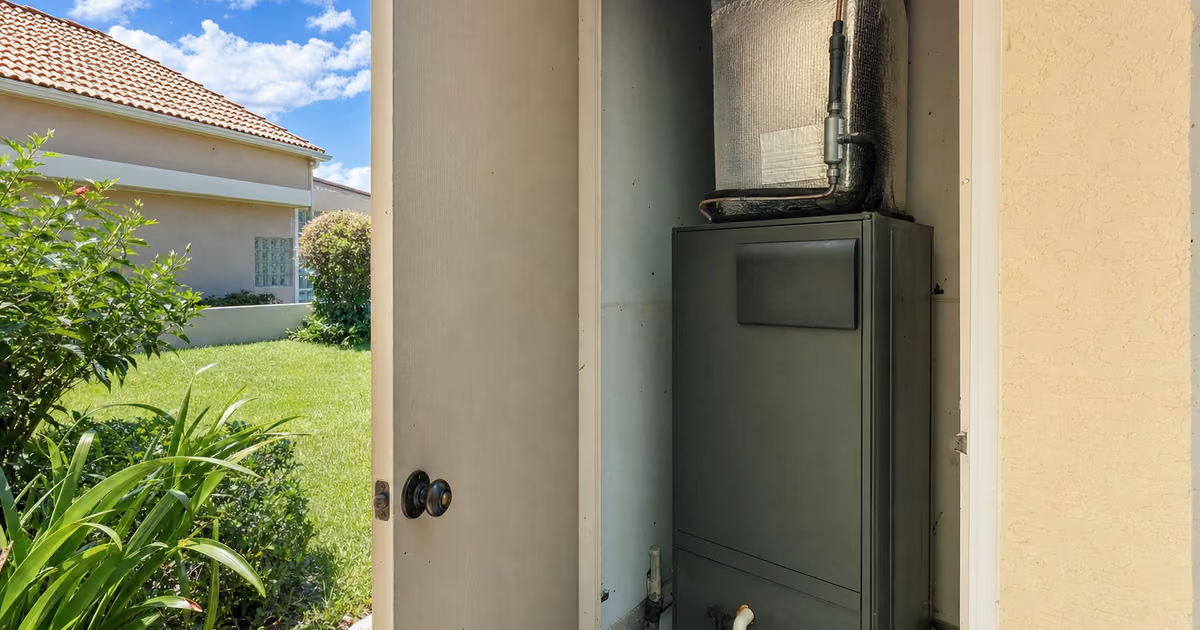
Why Whiskey Creek ducts load up faster
Start with the attic. These are block ranches from the 1960s and 70s, built low around the golf course. The roofs are flat or low-pitch. That leaves almost no attic height. Duct runs get squeezed under the deck. Flex crushes at the bends. Air slows down in a crushed run. Slow air drops its dust instead of carrying it. So the debris settles in the trunk, not at your filter.
Then the lots. Oak and pine canopy shades most of this neighborhood. Leaf litter stays on flat roofs. Spring pollen gets everywhere. Shaded ground dries slowly after rain. Humidity stays high right against the block. Anything pulled in through a leaky return boot arrives damp.
Original interior soffit chases are the other issue. Builders here used framed chases as part of the return path. Those cavities were never sheet metal. They collect construction dust and drywall grit. Insulation fiber settles in too, over decades. A vacuum hose alone does not fix a chase. It needs sealing or lining, a different job than cleaning.
Converted carports matter too. Many were enclosed into garages later, with ductwork added as an afterthought. Check those supply runs first. Odor and gray streaking at the register tell you where to look.
Same-day service available in Whiskey Creek, FL. Call to check availability.
Call (239) 946-9388Nearby areas we also serve
In addition to Whiskey Creek, we cover Cape Coral, Tice, Lochmoor Waterway Estates, Fort Myers, North Fort Myers, Punta Gorda.
Serving Whiskey Creek, FL and Surrounding Areas
Also serving: Tice, Lochmoor Waterway Estates, Whiskey Creek, Fort Myers, North Fort Myers, Punta Gorda, San Carlos Park, Iona, Villas, Cypress Lake, Gateway, McGregor, Three Oaks
Frequently Asked Questions
Our house is a 1960s block ranch with a shallow attic — can you even reach the ducts?
Usually, yes, but it's slower work than in a newer house with a walkable attic. In Whiskey Creek the roofs are flat or low-pitch, so there's little clearance above the ceiling. The supply runs are often squeezed or kinked where they pass through tight spots. We work from the registers and the air handler as much as possible rather than crawling the whole attic, and we check the runs that have been compressed over the years, since those collect debris faster than a straight run would.
What causes most of the dirt in ducts around here?
The big one is the tree canopy. Mature oaks and pines over these lots drop leaf litter all year and heavy pollen in spring, and that fine material gets pulled in through return grilles, door undercuts and any gap at the air handler closet. The second is humidity. The shaded lots here stay damp and slow to dry, so the system runs long and moist air moves through the ducts. Dust that would stay loose in a dry climate sticks to the duct wall instead. We also see dirt coming in through the original interior soffit chases, which were never built airtight and often act as an unofficial return path.
How soon can someone get out to Whiskey Creek?
Whiskey Creek sits right between McGregor and Cypress Lake, so it's an easy stop on most of our routes and we're usually out within a day or two of your call. If you're smelling something musty at the vents or you've just had work done at the air handler, say so when you call and we'll try to move you up.
Do you do same-day appointments?
Sometimes. Mornings are easier to fill than afternoons, and a straightforward single-system ranch here is a job we can often slot in when something opens up. What slows a same-day down is not knowing what we'll find. If the carport was closed in for a garage and ductwork was extended into it, or if the soffit chases are being used as returns, the job takes longer than a standard visit. Call early and we'll tell you honestly whether today is realistic.
What makes one Whiskey Creek house cost more than the neighbor's?
Mostly the number of supply and return openings and how hard they are to get to. These homes were built close in size but they haven't aged the same way. A house still on its original layout with a couple of returns is at the lower end. What pushes it up is added square footage from an enclosed carport, a second system, flex added over the years into a shallow attic that's hard to access, or soffit chases that need attention rather than just the ducts themselves. Insulation condition around the air handler closet can factor in too. We'd rather look at the system and tell you what we see than quote a number over the phone that turns out to be wrong.